
Tuesday, January 20th, 2026 | By
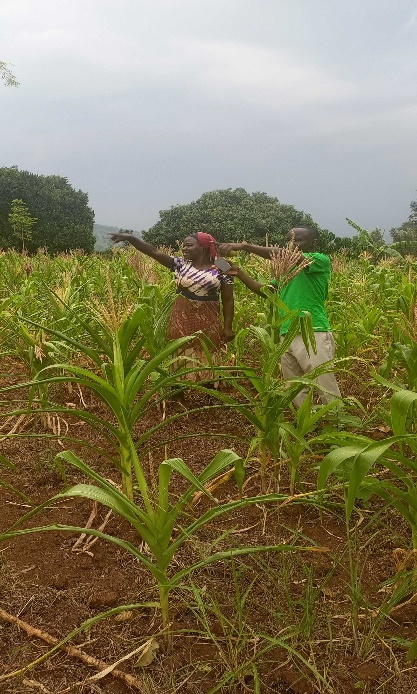
Maize is a staple food and key source of income for households in Ssekamalya Village Kyankwanzi District. However, increasing climate variability characterized by prolonged sunshine, delayed rainfall, and extended dry spell is severely undermining maize production in most parts of the district. Smallholder farmers who depend entirely on rain-fed agriculture are facing rising crop losses and food insecurity.
During the current growing season, farmers experienced extreme moisture stress resulting in poor germination and early crop drying. Some households were forced to cut down immature maize for livestock feed, eliminating prospects for grain harvest or seed saving for the next season.
Residents associate worsening weather conditions with environmental degradation, particularly large-scale tree cutting for charcoal production. Community leaders acknowledge the urgency of the situation and have committed to mobilizing short-term seed support while calling for longer-term environmental protection measures.
According to the Food and Agriculture Organization (FAO), maize requires 500–800 mm of well-distributed rainfall per growing season. Increasing precipitation gaps in Kyankwanzi District threaten maize yields and livelihoods. Nationally, 70–90% of maize in Uganda is produced by small-scale farmers (MAAIF), making climate change a direct threat to national food security and rural economic stability.
Without timely intervention, climate-induced crop failure will continue to deepen poverty, increase dependence on food aid and accelerate environmental degradation.
Policy Gaps
Policy Recommendations
To protect maize production and strengthen community resilience, this brief calls for coordinated action by government, NGOs and development partners to:
Call to action
The experience of Ssekamalya Village demonstrates that climate change is no longer a future risk; it is a present crisis. Immediate, community-centered, and environmentally sustainable interventions are essential to safeguard food security, protect livelihoods and build long-term resilience in Kyankwanzi District and similar rural communities across Uganda.
STOTY COMPILED BY ABDUL KYAKONYI
Copyright ©2026 Community Green Radio . All Rights Reserved. Designed : Lwegatech